When Dr Rachel Hawes OBE speaks about trauma care, her perspective is forged not only in operating theatres and emergency departments, but in some of the most demanding environments imaginable. A Consultant in Anaesthesia and Prehospital Emergency Medicine at the Royal Victoria Infirmary (RVI), and a senior doctor with the Great North Air Ambulance Service (GNAAS), Dr Hawes has spent her career at the intersection of civilian trauma care, military medicine and prehospital innovation.
On Thursday 5 March 2026, Dr Hawes will bring that experience to London as a keynote speaker at the AfPP Emergencies and Trauma Symposium, held at The Royal Society of Medicine. The one-day event aims to unite UK trauma teams and empower perioperative professionals with clinical insight, practical strategies and resilience tools for emergency care.
Finding her path into trauma medicine
Dr Hawes’ route into trauma and prehospital care began while she was still a medical student, when she was introduced to what was then known as the Territorial Army, now the Army Reserves.
“I was told about the TA at medical school and it immediately appealed,” she says. “I liked outdoor activities, and you were paid – which meant I could ditch the bar job I was doing alongside university.”
Joining the Army Reserves opened doors to opportunities she would not otherwise have had so early in her career.
“It gave me access to a huge number of training courses and exercises that simply weren’t available elsewhere,” she explains. “That exposure allowed me to focus strongly on trauma, emergency medicine and prehospital care.”
Crucially, it also gave her the framework to begin translating military systems into civilian healthcare settings.
“I could take what I was learning and use it to introduce new systems and processes into civilian care,” she says. “That included auditing the major haemorrhage protocol and looking at how we could standardise and improve resuscitation for all patients.”
This early blending of military and NHS practice laid the foundations for the innovations that would later define her career.
Lessons learned under fire
Dr Hawes’ session: UK Prehospital Trauma Care – Integrating lessons from conflict, draws directly on her experience as an Army Reservist, a role she has balanced alongside her NHS career since joining as a medical student.
“The most defining moment in my career was when I was a registrar deployed to Afghanistan,” she explains. “There was a major incident following an IED explosion, with multiple critically injured casualties.”
Stationed at Camp Bastion, she was faced with a quadruple amputee – the most severely injured patient of the day, and something she had never managed before.
“It was a huge test,” she says. “But part way through, I realised that if I stuck to what I’d learned, I could deal with it. That moment – recognising your own capability under pressure – stays with you.”
Although the injured service person was later flown home to family and sadly died, Dr Hawes describes the learning from such incidents as profound.
“You only gain that depth of understanding by working in these environments. What’s crucial is learning from every incident, simplifying systems and communication, and not reinventing the wheel when not necessary. Sharing good practice saves lives.”
Translating military medicine into civilian care
Those lessons have had a direct and lasting impact on UK trauma care. During her deployment, Dr Hawes observed military helicopters delivering blood transfusions directly to patients at the scene of injury.
“I recognised immediately that this could – and should – be done in civilian prehospital care.”
That insight led her to head up the ‘Blood on Board’ initiative in the North East and Cumbria, in partnership with GNAAS and the charities Northumbria and Cumbria Blood Bikes. Launched in January 2015, the service enables blood to be delivered to air ambulance crews 365 days a year, allowing transfusions to begin at the roadside, on a hilltop or in remote communities – rather than waiting until arrival at an emergency department.
Since its launch, Blood on Board has treated over 800 patients, and it is estimated that at least 200 lives have been saved that would otherwise not have been.
“We’re incredibly proud of how the service has evolved,” Dr Hawes says. “Replacing major blood loss as quickly as possible is vital, and this initiative means life-saving treatment can begin immediately.”
The programme has continued to develop, with red blood cells and plasma now carried day and night, and systems in place to scale up rapidly during major incidents. Research into whole blood transfusion is ongoing, with Dr Hawes leading feasibility and comparative studies to further improve outcomes.
Her work also helped establish a gold-standard major haemorrhage resuscitation programme, ensuring consistent, high-quality care for all trauma patients.
A call she never expected
Despite her many achievements, the moment Dr Hawes learned she was to receive an OBE for services to healthcare came as a complete surprise.
“I was actually on maternity leave at the time,” she recalls. “On Boxing Day, I had a missed phone call from a Brigadier. I was told it was urgent that I rang him back.”
Her first thought was that she was about to be deployed – a confusing prospect while still officially on maternity leave.
“I remember thinking, why would I be deploying now?”
The reality, however, was very different. The call was to inform her that she was to be awarded an Officer of the Order of the British Empire (OBE) in recognition of her work translating military trauma care into civilian healthcare and saving lives.
“It was a huge honour – and one I never expected,” she says.
Dr Hawes received her OBE from Her Majesty The Queen at Buckingham Palace in 2018, describing the occasion as an immensely proud moment for both her and her family.
“It was incredibly special. Something I’ll always remember.”
Human factors, teamwork and resilience
At the AfPP Symposium, Dr Hawes will not only explore clinical advances, but also the human factors that underpin effective emergency care.
“High-pressure environments demand excellent teamwork, communication and leadership,” she explains. “The principles we use in military and prehospital medicine are highly transferable to perioperative teams.”
Her session will cover:
- Key lessons from military and prehospital emergency medicine
- Outcomes and impact of the Blood on Board initiative
- Human factors strategies to improve teamwork, decision-making and safety under pressure
These insights are particularly relevant for perioperative practitioners working across trauma theatres, emergency surgery and critical care.
Balancing three careers – and family life
Running parallel careers in the NHS, the Army Reserve and air ambulance medicine is no small feat – and Dr Hawes is candid about the challenge.
“I’ve been very lucky. My Clinical Director has always supported my Army Reserve commitments, including the two-week annual training camp. The skills from each role are mutually beneficial, and both I and the Trust have gained enormously.”
Away from work, she is also a mum to an eight-year-old daughter and a six-year-old son, and firmly believes in the importance of switching off.
“I do pilates, meet a friend for a coffee when I can, and I play badminton,” she smiles. “Those small moments really matter.”
Her advice on coping with the emotional weight of trauma care is refreshingly honest.
“It’s normal to feel sad when something sad happens. It doesn’t mean your mental health is failing – it means you’re human. What’s important is processing it, talking about it, and supporting each other.”
A must-attend event for trauma and perioperative teams
Dr Hawes’ career embodies the Symposium’s core aim: bringing people together across disciplines to improve emergency and trauma care.
“This event is about sharing knowledge, strengthening teamwork and empowering professionals at every stage of the patient journey,” she says. “That’s how we make care safer and better.”
AfPP Emergencies and Trauma Symposium – Event Details
Date: Thursday 5 March 2026
Time: 8.30am – 4.30pm
Location: The Royal Society of Medicine, London
Audience:
Perioperative teams, surgeons, anaesthetists, emergency physicians, air ambulance teams, healthcare researchers, hospital administrators and industry leaders.
Tickets:
£50 AfPP members, £100 non-members
Book your place:
https://www.eventbrite.co.uk/e/emergencies-and-trauma-symposium-tickets-1738085463409?aff=oddtdtcreator
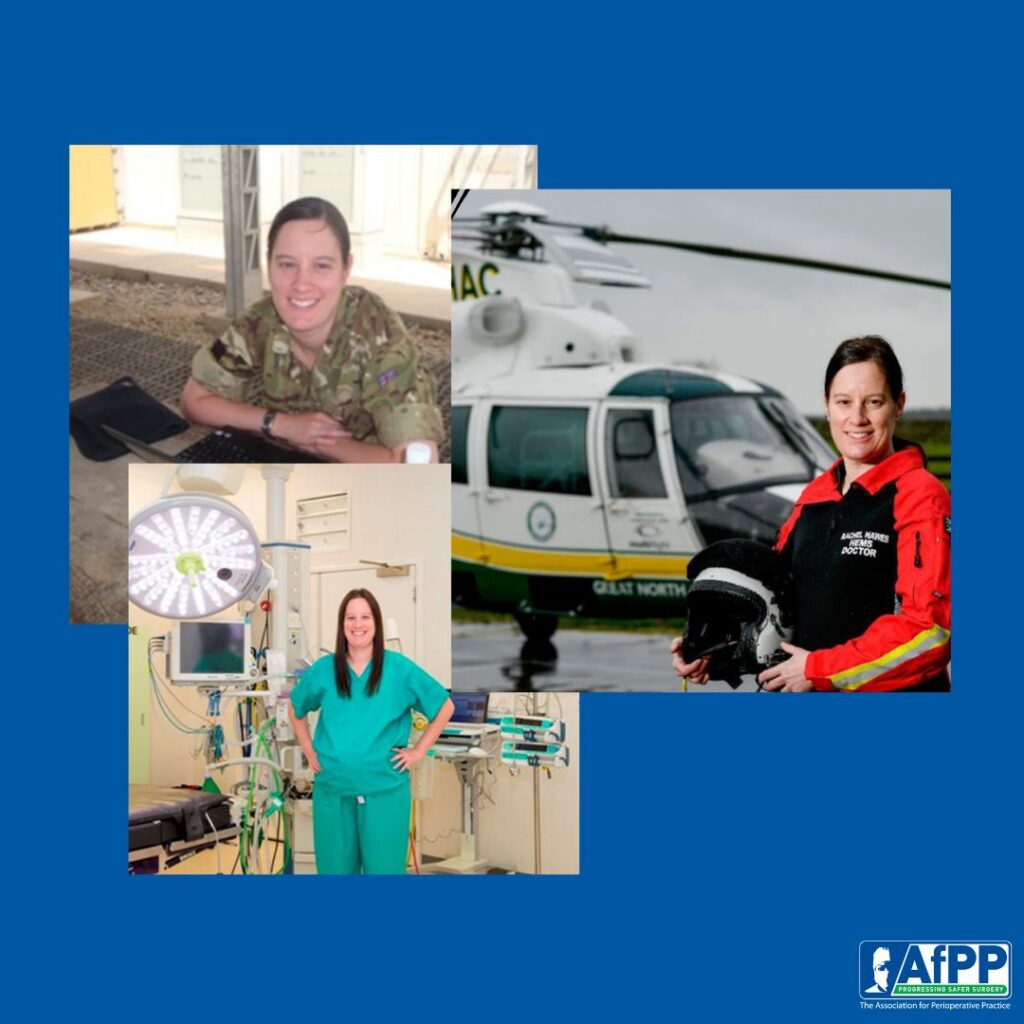
Pictures show Dr Hawes.