A powerful simulation exploring a time-critical perioperative emergency has earned top recognition at the AfPP Emergencies and Trauma Symposium at The Royal Society of Medicine in London, with a team from Liverpool John Moores University taking home the winning poster award.
Helen Fowler, Roy Walker and Beth Spencer were “totally surprised” to learn that their submission, Emergencies in Perioperative Practice: Simulated Post-Thyroidectomy Haematoma Management, had been selected as the winner. The trio’s work stood out for its focus on combining technical emergency protocols with human factors and team-based decision-making in high-pressure situations.
“We really didn’t expect it,” Helen said. “It was a fantastic moment, especially knowing the data came from a session we delivered at the AfPP Annual National Conference last year.”
From conference workshop to award-winning poster
The poster data was rooted in a high-fidelity simulation workshop originally delivered at the AfPP Annual National Conference in Warwick. Designed for perioperative practitioners, the session recreated a rapidly deteriorating patient in the post-anaesthetic care unit following thyroidectomy; a rare but life-threatening scenario caused by post-operative haematoma and airway compromise.
The simulation incorporated structured clinical frameworks including DESATS (airway assessment), SCOOP (haematoma decompression), and FONA pathways aligned with national guidance. Crucially, it also embedded four “pause points,” allowing participants to reflect, reassess and make decisions under pressure.
The results were striking. Participants reported significantly improved confidence in recognising early airway obstruction, escalating care, and working effectively as a team. More than 95% described the session as clear and informative, while 90% said they felt better prepared for real-world emergencies.
Building confidence through realism
Helen, a Senior Lecturer in Clinical Skills and Simulation, has built her academic career around creating realistic, high-impact learning experiences. With over a decade of perioperative nursing experience across multiple specialities, she brings clinical authenticity into every aspect of her teaching.
Now working within the Faculty of Health at Liverpool John Moores University, she designs simulation programmes that go beyond technical skills to include communication, leadership and situational awareness; core elements of safe perioperative care.
Her work is increasingly focused on preparing practitioners not just to know what to do, but to perform effectively under pressure.
“This is about psychological readiness as much as clinical competence,” she explains. “We want practitioners to feel confident navigating uncertainty, stress and complexity.”
A strong focus on human factors
That emphasis is shared by co-author Roy Walker, Clinical Skills Tutor and lead of the AfPP Human Factors Forum. With 16 years’ experience as an Anaesthesia Associate and a background as an Operating Department Practitioner, Roy brings both clinical and academic insight to the team.
Now working full-time in higher education, he combines his perioperative expertise with his training as a graduate psychologist, exploring how human behaviour, cognition and teamwork influence patient safety.
His passion for human factors is central to the simulation’s success.
“Understanding how people think, communicate and respond under pressure is critical,” Roy explains. “Technical skills alone aren’t enough in emergency situations; team dynamics and decision-making processes are what ultimately make the difference.”
Collaboration in action
Beth Spencer, Simulation Facilitator, completes the team, playing a key role in delivering immersive, high-quality simulation experiences. Together, the trio have created a model that not only teaches emergency protocols but embeds them within realistic, multidisciplinary team environments.
Their approach aligns with best practice standards, using structured debriefing and high-fidelity design to maximise learning outcomes.
Looking ahead
The success of the simulation extends far beyond the Symposium. It has already been integrated into undergraduate and postgraduate nursing programmes, helping to prepare the next generation of practitioners for high-risk perioperative emergencies.
Helen confirmed that the team will be delivering another simulation workshop at the 2026 AfPP Annual National Conference, building on the momentum of their award-winning work.
Recognition and continued achievement
The team’s win was recognised with an Amazon voucher, but more importantly, it highlights the growing impact of simulation-based education within perioperative practice.
For Helen, it adds to an already impressive list of achievements. Previously recognised with the AfPP Novice Writer Award for her published work on theatre efficiency, she continues to balance academic leadership with clinical insight and has now set her sights on pursuing a PhD alongside her role.
Advancing safer perioperative care
At its core, the winning poster reflects a wider shift within perioperative education: a move towards immersive, human-centred learning that prepares practitioners for the realities of modern healthcare.
By combining clinical frameworks with human factors, teamwork and reflective practice, the Liverpool John Moores University team is helping to build a workforce that is not only skilled, but resilient, adaptable and ready to respond when it matters most.
Their success at the AfPP Emergencies and Trauma Symposium is not just a personal achievement, but a powerful example of how education, innovation and collaboration can drive safer patient care.
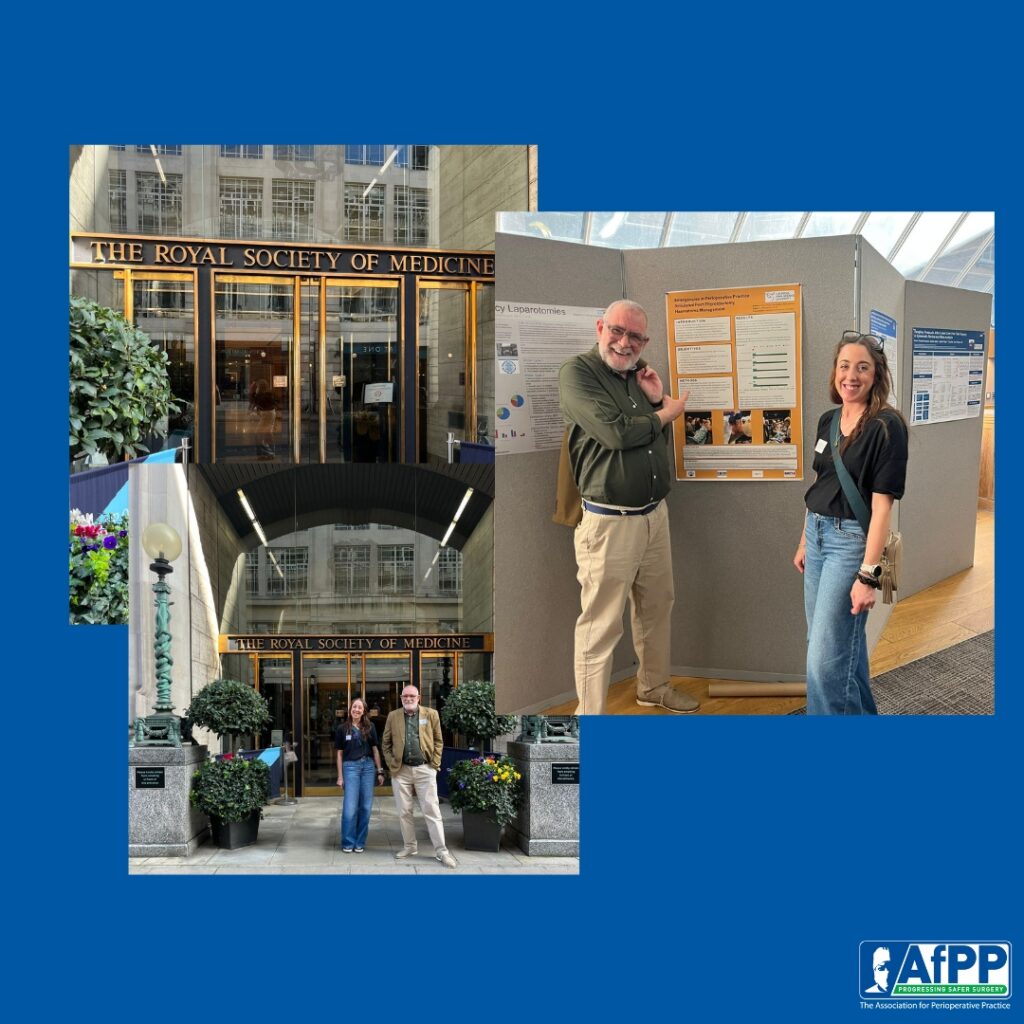
Pictures show Helen and Roy at the AfPP Emergencies and Trauma Symposium, and with their winning poster submission at the event.