
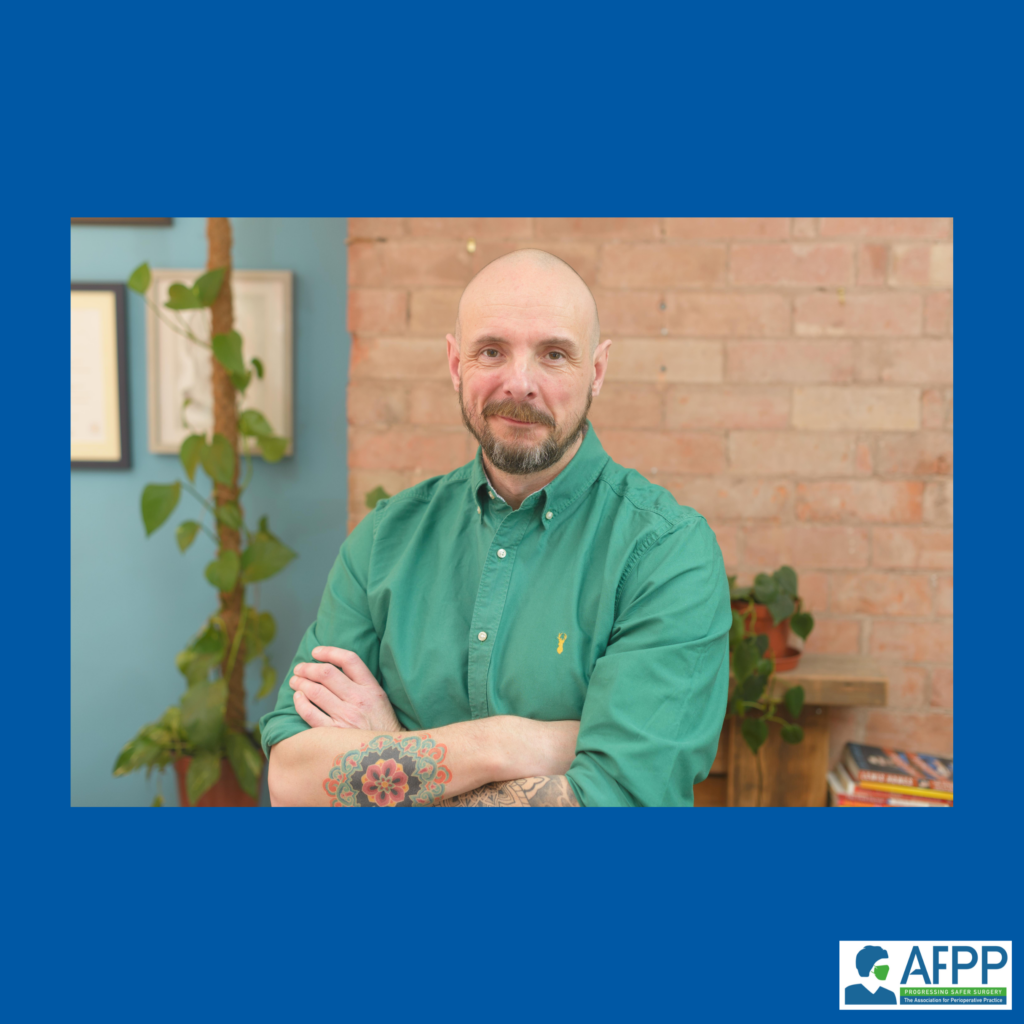
At this year’s AfPP Annual National Conference 2026, Dave James will lead two sessions exploring wellbeing, resilience, authenticity and team culture in healthcare. Dave, a speaker coach, former healthcare professional and two-time TEDx speaker, helps people communicate authentically without losing themselves – and explores what becomes possible when people feel safe to use their voice.
Ahead of the conference, we spoke with Dave about burnout, team culture, and why learning and having the confidence to speak honestly matters more than ever in healthcare.
Q: Dave, both of your sessions centre around happiness, authenticity, and psychological safety. Why do these conversations matter so much in healthcare?
They matter because healthcare is full of deeply committed people working under a huge amount of pressure.
Most people enter healthcare because they care deeply, but over time it can become easy to disconnect from yourself whilst you’re busy looking after everyone else. You become functional, capable and efficient – but not necessarily okay.
What interests me is what becomes possible when people feel safe enough to be human again. Not perfect. Not endlessly resilient. Just human.
When people feel psychologically safe – able to speak honestly, ask questions, raise concerns or admit they’re struggling – communication improves, trust grows and teams start to function better. In healthcare, that matters enormously.
Q: Your first session is called “How to be a Happy Human”. What does “happy” mean to you in this context?
I think people hear the word “happy” and assume I mean constantly positive or endlessly optimistic – but I definitely don’t!
In this context, happiness is more about knowing what matters to you, understanding what you can and can’t control, and having enough inner capacity to navigate pressure without losing sight of yourself.
Healthcare professionals deal with intense demands every day. This session isn’t about pretending those pressures disappear. It’s about recognising where choice still exists, and how authenticity, purpose and self-awareness can support resilience in a healthier, more sustainable way.
Q: You talk about “authenticity” a lot. In high-pressure clinical environments, that can feel difficult for people. What do you mean by it?
Authenticity doesn’t mean saying every thought out loud or ignoring professional boundaries. It means not having to constantly perform a version of yourself that feels disconnected from who you really are. A lot of people spend huge amounts of energy trying to appear fine, calm or in control all the time, and over time that becomes exhausting.
What interests me is helping people to communicate and contribute in ways that feel honest, grounded and sustainable, rather than performative. When people feel safer being themselves, they usually communicate better, connect better and work better – both individually and as part of a team.
Q: Your second session focuses on building happy teams and team dynamics. Why do you think individual authenticity and psychological safety is particularly important in perioperative settings?
Because perioperative teams work in high-pressure environments where communication has real consequences.
People need to feel able to ask questions, challenge decisions, raise concerns, admit uncertainty and contribute ideas without fear of embarrassment or judgement.
When people are frightened of getting things wrong, they often become quieter – and in healthcare, silence can be dangerous. Feeling psychologically safe helps teams communicate more clearly, respond better under pressure and perform more effectively when it matters most.
Q: One of the phrases you use is “intentional authenticity”. What does that look like within a team?
For me, intentional authenticity is about creating teams where people don’t have to leave themselves at the door, whilst also recognising that authenticity exists in relation to other people.
It’s not about saying whatever you want and calling it honesty. It’s something more thoughtful than that. It’s self-awareness, emotional intelligence, honesty and responsibility working together.
It’s really about asking: how do I bring my perspective, personality and humanity into this team in a way that helps us function better together?
Q: Your background combines healthcare, mindfulness, coaching, and public speaking. How do those things connect?
It’s a great question! At their core, they’re all about human connection.
Healthcare taught me about pressure, responsibility, communication and care. Mindfulness taught me awareness. Coaching showed me how much people struggle when they feel they can’t fully use their voice.
And public speaking taught me something really interesting – most people aren’t afraid of speaking – they’re afraid of being truly seen. That insight shapes so much of my work now, which is about helping people communicate without losing themselves in the process.
Q: What do you hope delegates leave your sessions thinking about afterwards?
Honestly, I hope they leave with a little more permission to be themselves more fully.
Healthcare professionals are incredibly skilled at caring for others, but they often need to extend some of that compassion to themselves as well.
If people leave with a better understanding of what they can and can’t control, a clearer sense of how authenticity and psychological safety affect wellbeing and team performance, and a stronger connection to their own values, then that feels meaningful.
Safer, healthier teams aren’t built through systems and processes alone – they’re also built through people feeling able to speak, contribute, connect and trust one another.
Q: We’re really excited about our Annual National Conference! What are you most looking forward to at Conference?
Spending time with like-minded professionals and having some real conversations.
Conferences are powerful because they create space to step outside the pace of day-to-day work and reflect not just on what we do, but how we do it.
Healthcare is full of incredibly capable people living with invisible pressure. If these sessions help even a few people feel more connected to themselves, their voice and their teams, then that feels worthwhile.
If you would like to attend this year’s Anual National Conference, please use the following link to find out more and book your place: https://conference.afpp.org.uk/
Tickets sales close on 17th July.